freeman4u16
Every year, thousands of African students set their sights on Canada for higher education, and it is easy to see why. Canada offers globally respected universities, a safe and welcoming multicultural environment, and a clear path from graduation to work and even permanent residency. The one obstacle that stops many bright students from making the move is cost. Fortunately, scholarships in Canada for African students are more available than most people realize, ranging from government-funded awards to university-specific packages and privately funded foundations. This guide breaks down everything you need to know: the best scholarships to target, who qualifies, what documents you need, and how to build an application that actually gets noticed.
Why Canada Is a Top Destination for African Students
Canada has become one of the most popular study destinations for African students for a combination of practical and personal reasons. Tuition and living costs, while still significant, tend to be more predictable than in the US or UK, and many provinces offer additional tuition reductions to students from specific African countries. Canadian degrees are recognized worldwide, and the country’s Post-Graduation Work Permit (PGWP) allows international graduates to gain valuable work experience after their studies, often serving as a stepping stone toward permanent residency. On top of that, Canada’s multicultural cities and long-standing partnerships with African governments and organizations, such as the Mastercard Foundation, mean African students are actively recruited rather than merely tolerated.
The Real Cost of Studying in Canada (And Why Scholarships Matter)
International tuition in Canada varies widely depending on the province, institution, and program. Undergraduate programs commonly range from roughly CAD 20,000 to CAD 45,000 per year, while professional programs such as engineering, business, and medicine can cost considerably more. Add living expenses, housing, health insurance, and travel, and the total cost of a Canadian degree can easily exceed CAD 30,000 to CAD 60,000 annually. For most African families, that figure is simply out of reach without external support, which is exactly why scholarships in Canada for African students matter so much. A single fully funded award can be the difference between a dream deferred and a degree completed, which is why it pays to treat scholarship research with the same seriousness as your academic preparation.
Types of Scholarships Available for African Students in Canada
Before diving into specific programs, it helps to understand the three broad categories of funding available.
1. Government-Funded Scholarships
These are funded by the Canadian federal government or provincial governments, often as part of broader international development and research goals. They tend to be highly competitive and are usually reserved for graduate-level (Master’s and PhD) study, though a few undergraduate options exist.
2. University-Specific Scholarships
Most Canadian universities set aside entrance scholarships, need-based awards, and merit awards specifically for international or Black and African-identifying students. These are usually tied to the admissions process, meaning your application for admission may automatically be considered, or you may need to submit a short separate form.
3. Private and Foundation-Funded Scholarships
Organizations such as the Mastercard Foundation, Aga Khan Foundation, and various corporate or community foundations fund large-scale scholarship programs that partner with specific Canadian universities. These often cover full tuition, travel, accommodation, and a living stipend, making them some of the most attractive options for African applicants.
Top Scholarships in Canada for African Students (2026/2027)
Below are some of the most established and reliable scholarships that African students should have on their radar. Always confirm current deadlines and requirements directly on the official university or program website, since these details change from year to year.
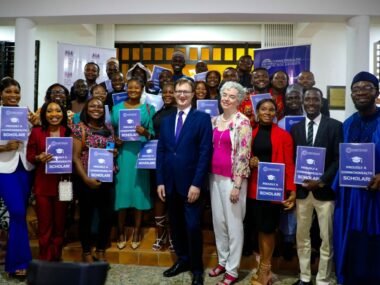
Mastercard Foundation Scholars Program — Partnering with universities including the University of Toronto, McGill, and the University of British Columbia, this program provides comprehensive funding for Sub-Saharan African students at the undergraduate and graduate levels, covering tuition, accommodation, travel, and a living stipend, along with mentorship and leadership development.
Vanier Canada Graduate Scholarships — A prestigious government-funded award for doctoral students, the Vanier Scholarship supports outstanding academic achievement, research potential, and leadership. It is highly competitive but open to international PhD applicants, including Africans, studying at participating Canadian universities.
Lester B. Pearson International Scholarship (University of Toronto) — This undergraduate entrance scholarship covers full tuition, books, incidental fees, and residence support for four years for exceptional international students, including many from Africa each year.
University of Waterloo Scholarships for Black Students — Designed specifically for students of African, Afro-Caribbean, and other Black identities, this award supports incoming undergraduate students with a significant one-time entrance scholarship.
McCall MacBain Scholarship — A full graduate scholarship at McGill University that combines funding with mentorship and leadership training, open to outstanding students worldwide, including African applicants pursuing a Master’s degree.
Quebec Merit Scholarship Program for Foreign Students — Funded by the Quebec government, this program supports international graduate students, including many from Francophone African countries, studying at Quebec-based institutions.
University of Ottawa International Tuition Reductions — Rather than a traditional scholarship, this program significantly lowers tuition fees for undergraduate students from specific eligible countries, several of which are in Africa, making a Canadian degree considerably more affordable.
Aga Khan Foundation International Scholarship Programme — Aimed at outstanding students from select countries who otherwise have no means of financing postgraduate study, this scholarship supports Master’s and PhD candidates, often in partnership with Canadian institutions.
Eligibility Criteria for Scholarships in Canada
While each scholarship has its own specific requirements, most programs targeting African students share a common set of eligibility expectations:
- Citizenship or residency in an eligible African country (this varies by program)
- Strong academic record, typically a first-class or upper second-class degree for graduate programs
- Admission or an active application to a recognized Canadian university
- Proof of English or French language proficiency (IELTS, TOEFL, or equivalent), unless prior education was conducted entirely in English or French
- A well-articulated statement of purpose or personal essay
- Letters of recommendation, usually two or three, from academic or professional referees
- Demonstrated leadership, community involvement, or research potential, depending on the scholarship
Documents You Will Typically Need
- Academic transcripts and certificates (translated into English or French if necessary)
- A valid international passport
- Statement of purpose or motivation letter
- Curriculum vitae or resume
- Letters of recommendation
- English or French language proficiency test results
- Research proposal (for Master’s research or PhD applicants)
- Proof of admission or an active application to the institution
Step-by-Step Guide to Applying
1. Start early. Most Canadian universities open applications for a September intake between September and January of the preceding year, and many scholarships have their own separate, often earlier, deadlines.
2. Shortlist universities and programs where you have a genuine academic fit, rather than applying broadly. Look for institutions with an established African student community or faculty conducting research relevant to your field.
3. Confirm admission requirements for your chosen program and gather your documents well in advance, since transcript translation and recommendation letters can take weeks.
4. Apply for admission first, since many scholarships automatically consider all admitted or applying students, while others require a separate scholarship application form submitted alongside or shortly after your admission application.
5. Write a tailored personal statement for each institution. Avoid recycling the same essay; mention specific professors, labs, or programs that align with your goals.
6. Submit everything ahead of the deadline. Late submissions are almost never considered for scholarship funding, even if the general admission deadline is still open.
7. Prepare for interviews. Some of the more prestigious scholarships, such as the Mastercard Foundation Scholars Program, include a virtual interview stage.
8. Track your application status through the university portal and respond promptly to any requests for additional information.
Tips to Strengthen Your Application
- Highlight leadership and community impact: Canadian scholarship committees consistently look for candidates who have led initiatives, volunteered, or driven change in their communities.
- Be specific in your essays: name the professors, courses, or research areas that specifically drew you to that institution.
- Apply for a fee waiver if you cannot afford application fees; many Canadian universities offer waivers for students from low-income backgrounds.
- Keep your online presence professional, since some committees review applicants’ public social media profiles.
- Apply to multiple scholarships and universities rather than relying on a single application, since competition is intense.
- Proofread everything, or have someone else review your documents, since small errors can undermine an otherwise strong application.
Common Mistakes African Applicants Should Avoid
- Waiting until the last minute: strong applications take months to prepare, not days.
- Submitting a generic personal statement to every school instead of tailoring it to each program.
- Ignoring smaller or less publicized scholarships in favor of only chasing the most famous names, like Mastercard or Vanier.
- Overlooking provincial and tuition-reduction programs, which are less competitive than headline scholarships but still meaningfully lower costs.
- Failing to double-check English or French proficiency requirements before applying, only to be disqualified late in the process.
- Not asking for feedback on essays before submission, missing a chance to catch weak arguments or unclear writing.
Scholarship Application Timeline (General Guide)
- September – December: Most university and scholarship portals open for the following year’s September intake
- December – February: Peak application period for many undergraduate and graduate scholarships
- March – May: Interview stages and shortlisting for competitive programs
- May – July: Admission and scholarship decisions released
- August – September: Visa processing, travel preparation, and enrollment
Frequently Asked Questions
Do I need admission before applying for a scholarship? It depends on the program. Some scholarships require you to already have an offer of admission, while others, particularly large foundation-funded programs, allow you to apply for admission and funding at the same time.
Can I get a fully funded scholarship without IELTS? Some universities waive the English test requirement if your previous education was conducted entirely in English, though this varies by institution and program level.
Are undergraduate scholarships harder to find than graduate ones? Most large-scale, fully funded scholarships in Canada target Master’s and PhD students, but a meaningful number of undergraduate entrance awards and tuition reductions exist, especially at universities such as Toronto, Waterloo, and Ottawa.
How early should I start preparing? At least twelve months before your intended start date. This gives you enough time to write strong essays, gather recommendation letters, sit language proficiency tests, and meet early scholarship deadlines.
Do scholarships cover the full cost of studying in Canada? Fully funded programs, such as the Mastercard Foundation Scholars Program, typically cover tuition, accommodation, travel, and a living stipend. Others, such as tuition reductions or entrance awards, only cover part of the cost, so it is worth combining several sources of funding, including university bursaries and part-time work opportunities, where permitted.
What happens if I miss a scholarship deadline? Most Canadian institutions do not make exceptions for late scholarship submissions, even if general admission is still open. If you miss a deadline, focus your energy on the next intake cycle and use the extra time to strengthen your application, retake language tests if needed, or gain more relevant experience.
Final Thoughts
Scholarships in Canada for African students are real, numerous, and genuinely attainable with the right strategy. The key is to start early, target programs that align with your academic background, and put real effort into essays and recommendation letters rather than submitting generic applications. Whether you are aiming for a fully funded Mastercard Foundation scholarship, a government-backed Vanier award, or a university-specific entrance scholarship, the opportunities are there for African students who prepare well and apply strategically. Bookmark this guide, start your research today, and give yourself the best possible shot at studying in Canada.


 freeman4u16