freeman4u16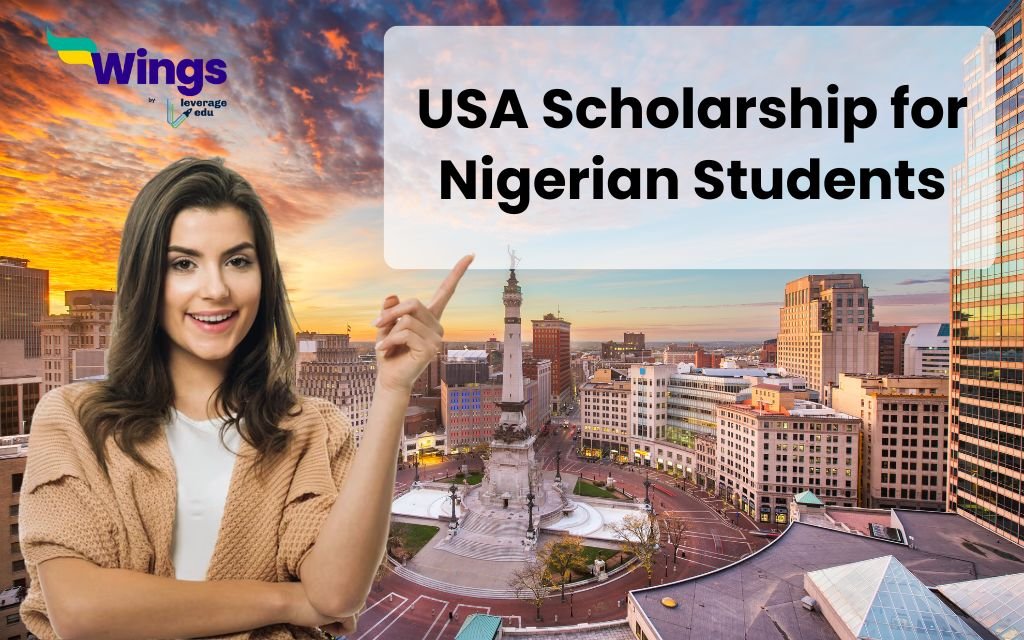
The United States remains one of the most popular study destinations for Nigerian students, thanks to its world-class universities, cutting-edge research facilities, and the sheer breadth of academic programs on offer. The challenge, as most Nigerian applicants know, is cost. Tuition, living expenses, health insurance, and travel can quickly add up to tens of thousands of dollars a year. Fortunately, a wide range of scholarships, from government-funded flagship programs to university-specific awards, exist specifically to close that gap for Nigerian students.
This guide walks through the most reliable scholarships in the USA for Nigerian students, what each one covers, who qualifies, and how to put together an application strong enough to compete on a global stage.
Why Nigerian Students Choose the USA
Nigerian students consistently rank among the largest groups of African students in American universities, and it is not hard to see why. US institutions offer flexible curricula that allow students to explore multiple disciplines before specializing, a strong culture of research funding and assistantships, and an alumni network that spans virtually every industry worldwide. Beyond academics, many Nigerian graduates of US universities go on to build careers that bridge both countries, using the exposure gained abroad to create opportunities back home.
The tradeoff is cost. Out-of-state and international tuition at many US universities can range from twenty thousand to over seventy thousand dollars a year before living expenses. This is precisely why scholarships, assistantships, and tuition waivers matter so much for Nigerian applicants, and why understanding exactly which programs are open to you can make the difference between an unaffordable dream and a fully funded reality.
Government-Funded Scholarships for Nigerian Students
1. Fulbright Foreign Student Program
The Fulbright Foreign Student Program is the flagship scholarship of the United States government and one of the most prestigious awards available to Nigerian graduate students. It funds Master’s and PhD study, as well as non-degree research, and is administered in partnership with the US Department of State across more than 160 countries. The award typically covers tuition and university fees, a monthly living stipend, health insurance, a settling-in allowance, and round-trip airfare. Nigerian applicants must hold a strong academic record, demonstrate leadership potential, and commit to returning to Nigeria for at least two years after completing the program, in line with the exchange visitor visa requirements attached to the award. For Nigeria specifically, there is a strong emphasis on doctoral candidates already several years into their PhD at a Nigerian university, alongside opportunities for prospective Master’s students.
2. Hubert H. Humphrey Fellowship Program
This is a non-degree program aimed at accomplished, early to mid-career professionals rather than fresh graduates. Fellows spend ten months at a US university engaged in professional development, coursework, and practical experience related to their field, with no requirement for GRE or GMAT scores. It is administered through US embassies, so Nigerian applicants should check the US Embassy in Nigeria for country-specific deadlines and guidance.
3. World Bank Graduate Scholarship Program (JJ/WBGSP)
Although not exclusively a US-based scholarship, the World Bank’s Joint Japan/World Bank Graduate Scholarship Program funds Master’s study at approved universities, many of which are in the United States, for nationals of World Bank member countries, which includes Nigeria. Priority is given to applicants with a clear plan to return to a developing country and contribute to its economic development. Deadlines typically fall in February each year.
University-Specific Scholarships Worth Knowing
Beyond government programs, many individual US universities offer generous scholarships and full-tuition awards specifically designed to attract talented international students, including Nigerians.
Ivy League and top research universities. Institutions such as Harvard, Yale, Stanford, and Cornell offer need-based and merit-based financial aid packages that, for qualifying international students, can function as fully funded scholarships covering tuition, living costs, and travel. These are highly competitive, and admission is assessed independently of financial aid, so a strong academic profile is essential before financial support even enters the conversation.
Boston University Presidential and Trustee Scholarships. These are among the university’s most prestigious full-tuition awards, recognizing exceptional academic performance and leadership ability among incoming undergraduates.
Berea College Scholarships. Berea is known for admitting only students with demonstrated financial need and covering full tuition for every admitted student, making it one of the more accessible full-ride options for Nigerian undergraduates who qualify.
Clark University Global Scholarships. These provide substantial four-year awards, often between fifteen and twenty-five thousand dollars annually, for international undergraduates.
University of Chicago International Scholarships. The university offers merit-based and need-based support for international students who demonstrate exceptional academic performance, particularly in fields like economics, computer science, and public policy.
Because eligibility criteria, deadlines, and award amounts change frequently, Nigerian applicants should always confirm current details directly on each university’s financial aid or international admissions page before applying.
Scholarships for Specific Groups
Mastercard Foundation Scholars Program. This program partners with a network of universities, several of them in the United States, to fully fund academically talented and socially committed African students, with particular attention to those who have faced significant economic or social barriers. It covers tuition, accommodation, and a range of support services designed to help scholars succeed both academically and personally.
AAUW International Fellowships. The American Association of University Women funds international women pursuing graduate or postgraduate study in the United States, with awards typically ranging from twenty to fifty thousand dollars annually. Nigerian women pursuing a Master’s, PhD, or postdoctoral research are eligible to apply.
Margaret McNamara Education Grants (MMEG). These grants support women over the age of twenty-five who are studying at accredited universities in the US and a handful of other countries, with a focus on applicants committed to improving the lives of women and children in developing countries.
Rotary Peace Fellowships. The Rotary Foundation funds up to fifty Master’s degrees and eighty professional development certificates annually at partner universities worldwide for experienced professionals working in peace and development.
Athletic scholarships. Nigerian student-athletes with strong performance records in sports such as basketball, track and field, or football can be recruited by US universities through athletic scholarship programs, which often cover tuition, accommodation, and other costs in exchange for competing on the university’s team.
Eligibility Requirements Nigerian Applicants Should Expect
While each scholarship has its own specific criteria, most US scholarships open to Nigerian students share a common set of expectations.
Strong academic record. Competitive programs typically expect a GPA equivalent of 3.0 or higher on a 4.0 scale, though highly selective scholarships often expect closer to 3.5 or above.
Standardized test scores. Most graduate programs require the GRE or GMAT, while English proficiency is usually assessed through IELTS or TOEFL, typically in the range of 6.0 to 7.0 for IELTS or 80 to 100 for TOEFL, unless a specific waiver applies based on your prior education.
Admission to a US institution. For most scholarships, particularly Fulbright and university-specific awards, you generally need to have applied to, or already secured admission at, an accredited US university before or alongside your scholarship application.
Leadership and community impact. US scholarship committees consistently look beyond grades for evidence of leadership, community engagement, and a credible plan for how your education will create impact, whether in Nigeria or globally.
Nationality and residency requirements. Some scholarships, like Fulbright, require that you not hold US citizenship or permanent residency, while others set specific quotas or eligibility windows for applicants from particular countries or regions.
How to Apply: A Step-by-Step Approach
Step 1: Build a shortlist that matches your profile. Rather than applying broadly, identify six to ten scholarships that align with your level of study, field, and personal background, since a targeted approach produces stronger, more tailored applications than a scattershot one.
Step 2: Start early, ideally twelve to eighteen months ahead. Many of the scholarships covered here, from Fulbright to university-specific awards, have long application cycles that begin roughly a year before the intended start date. Build a master calendar of deadlines as soon as you shortlist your target programs.
Step 3: Prepare your standardized tests well in advance. Book your GRE, GMAT, IELTS, or TOEFL at least three months before your earliest deadline, since these scores are often the first filter scholarship committees apply.
Step 4: Secure admission or apply concurrently to your target universities. Many scholarships require or strongly favor applicants who already have an admission offer, so align your university applications with your scholarship timeline.
Step 5: Gather your academic documents early. Certified transcripts, degree certificates, and a well-organized CV are required by nearly every scholarship on this list, and processing these documents through Nigerian institutions can take two to four weeks, so request them well ahead of time.
Step 6: Request recommendation letters six to eight weeks before your deadline. Give your referees enough time to write a thoughtful, specific letter rather than a rushed, generic one.
Step 7: Tailor your personal statement to each scholarship’s mission. A statement written for Fulbright, which emphasizes cultural exchange and a return commitment to Nigeria, should look different from one written for the Mastercard Foundation, which emphasizes leadership and community impact. Generic statements are one of the most common reasons strong applicants get rejected.
Step 8: Submit early and keep records. Avoid last-minute submissions, since technical issues and system delays are common close to deadlines, and keep confirmation records of everything you submit.
Common Mistakes to Avoid
- Applying to scholarships without first checking nationality, GPA, or age restrictions, which wastes valuable preparation time on programs you are not eligible for.
- Waiting until a few weeks before the deadline to request transcripts or recommendation letters.
- Submitting the same personal statement to every scholarship without tailoring it to each program’s specific mission and values.
- Underestimating how long it takes to prepare for and schedule standardized tests like the GRE or IELTS.
- Overlooking university-specific scholarships in favor of only the most famous government-funded programs, when many of the most generous awards for Nigerians come directly from individual universities.
Frequently Asked Questions
Do I need IELTS or TOEFL for all US scholarships?
Most scholarships and universities require proof of English proficiency, typically IELTS 6.0 to 7.0 or TOEFL 80 to 100, though some universities waive this requirement if your previous education was conducted entirely in English.
Can I apply for a US scholarship without first getting admission to a university?
It depends on the scholarship. Programs like Fulbright generally expect you to apply for admission around the same time as the scholarship, while some university-specific scholarships are automatically considered as part of your regular admission application.
Are scholarships available for undergraduate students, or only graduate students?
Both. While Fulbright and several government programs focus on graduate study, undergraduate-specific awards such as Berea College Scholarships, Clark University Global Scholarships, and various university merit scholarships are open to Nigerian undergraduates.
How many scholarships should I apply to?
Most successful applicants apply to between six and ten scholarships that genuinely match their academic level, field, and personal background, rather than applying broadly to every program they come across.
Is it true that scholarships require a return commitment to Nigeria?
Some do, most notably Fulbright, which legally requires recipients to return to their home country for at least two years after completing the program. Others, such as university merit scholarships, carry no such requirement.
Final Thoughts
Studying in the United States on a scholarship is entirely achievable for Nigerian students who approach the process strategically. Start early, build a realistic shortlist of programs that match your academic profile and goals, and invest real effort into the documents that scholarship committees weigh most heavily: your personal statement, your recommendation letters, and evidence of leadership and impact. With the right preparation, the scholarships covered in this guide can turn a US education from an expensive dream into a fully funded reality.


 freeman4u16