 freeman4u16
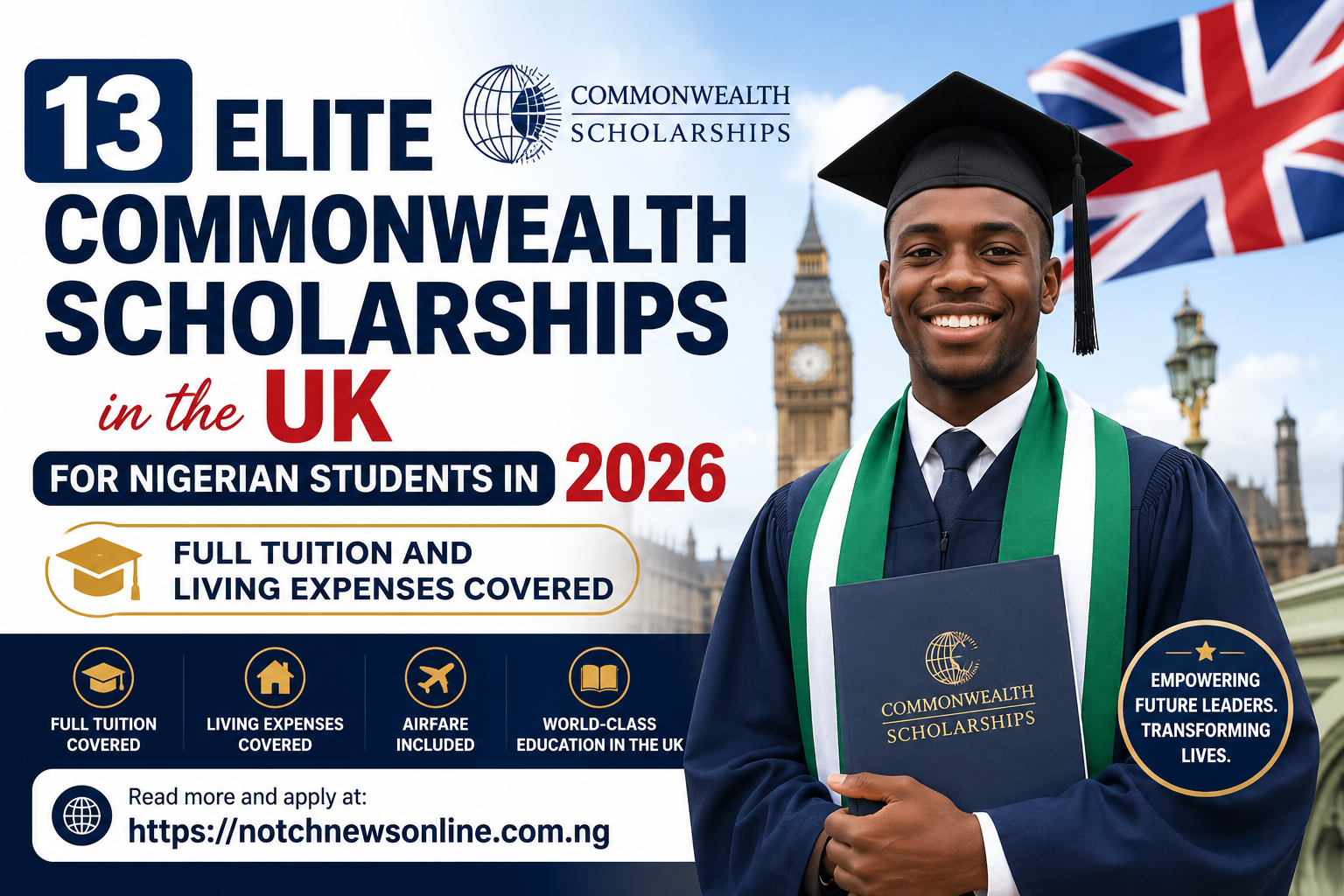
If you are a Nigerian student dreaming of a fully funded postgraduate education in the United Kingdom, the Commonwealth Scholarships program remains one of the most reliable and prestigious routes available to you. Funded by the UK government through the Foreign, Commonwealth and Development Office (FCDO) and administered by the Commonwealth Scholarship Commission (CSC), this scheme has supported thousands of Nigerians to study Master’s and PhD programs at top UK universities without paying a dime in tuition.
This guide breaks down everything you need to know about Commonwealth Scholarships for Nigerian students in 2026, including the different scholarship categories, eligibility requirements, application timelines, the benefits you can expect, and a step-by-step approach to putting together a winning application.
What Are Commonwealth Scholarships?
Commonwealth Scholarships are fully funded awards offered to citizens of Commonwealth countries, including Nigeria, to pursue postgraduate study in the United Kingdom. The scheme was established to support human capital development across the Commonwealth by giving talented individuals from low and middle income member countries access to world class UK education, on the understanding that scholars return home to contribute to their country’s development.
Nigeria has consistently been one of the largest beneficiaries of these awards on the African continent, largely because of the sheer number of qualified applicants and the country’s active participation through its Federal Ministry of Education and the Federal Scholarship Board (FSB).
Each year, the Commonwealth Scholarship Commission awards places across several categories, and Nigerian students are eligible to apply for most of them, provided they meet the specific academic and residency requirements attached to each category.
Types of Commonwealth Scholarships Available to Nigerians
Understanding the different categories is the first step to figuring out which one suits your academic goals and current circumstances.
1. Commonwealth Master’s Scholarships
These are for candidates who wish to pursue a one-year taught Master’s degree in the UK. Applications for this category are routed through a National Nominating Agency, and for Nigeria, that agency is the Federal Scholarship Board. This means you cannot apply directly to the CSC for this category; you must first go through the FSB’s nomination process.
2. Commonwealth PhD Scholarships
This category supports doctoral research at UK universities, typically lasting three to four years. Nigerian applicants also apply through the Federal Scholarship Board’s nomination route, and there is a related category specifically for least developed countries and vulnerable states, for which Nigeria qualifies.
3. Commonwealth Shared Scholarships
Unlike the Master’s and PhD Scholarships, Shared Scholarships are jointly funded by the CSC and participating UK universities and are targeted at development-focused Master’s courses. Applicants apply directly through the university offering the course rather than through the FSB, although Nigeria must be on the list of eligible countries, which it consistently is.
4. Commonwealth Distance Learning Scholarships
This category allows Nigerian professionals to study towards a UK Master’s degree without relocating, through distance and blended learning. It is particularly attractive to mid-career professionals who cannot leave their jobs for full time residential study but still want a UK qualification. Applications for this category typically open in January each year and close around April, and successful candidates apply directly through the CSC rather than through the FSB.
5. Commonwealth Split-Site Scholarships
This category is designed for PhD students already registered at a university in their home country who wish to spend a portion of their doctoral studies at a UK institution.
6. Queen Elizabeth Commonwealth Scholarships (QECS)
Though administered separately by the Association of Commonwealth Universities rather than the CSC, the Queen Elizabeth Commonwealth Scholarships are closely related in spirit and also fully fund a two-year Master’s degree, but at universities in select low and middle income Commonwealth countries rather than the UK. Nigeria is among the eligible countries, and there are usually two application windows each year, one opening around November or December and another around March or April.
Benefits of the Commonwealth Scholarship
The financial package attached to Commonwealth Scholarships is one of the most comprehensive among international scholarships, which is why competition remains intense every year. Successful Nigerian scholars typically receive:
- Full payment of tuition fees, with the scholar bearing no cost whatsoever
- A monthly living allowance to cover accommodation, food, and daily expenses while resident in the UK, with a higher rate for scholars based in London due to the higher cost of living
- Return economy class airfare between Nigeria and the UK
- A one-off arrival allowance to help with initial settling-in costs
- Thesis or research grants for eligible PhD and research-based programs
- Additional allowances such as warm clothing grants where applicable, and support for a limited number of eligible dependants for some award categories
Distance Learning and Shared Scholarships have slightly different benefit structures. Since Distance Learning scholars remain in Nigeria, they do not receive travel or living allowances, but tuition fees and a modest allowance for study related costs, such as internet access and study materials, are typically covered.
Eligibility Requirements for Nigerian Applicants
While specific requirements vary slightly by category, the core eligibility criteria that the Commonwealth Scholarship Commission applies to Nigerian applicants generally include the following.
Citizenship and residency. You must be a Nigerian citizen or hold refugee status in Nigeria, and you are generally required to be permanently resident in Nigeria at the time you apply. The scholarship is designed for people applying from within a Commonwealth country rather than those who have already relocated abroad.
Academic qualifications. For Master’s Scholarships, you typically need a first degree with at least Second Class Upper Division, commonly referred to as a 2:1. For PhD Scholarships, a Second Class Lower Division may be accepted, particularly where the applicant also holds a relevant postgraduate qualification. Always confirm the specific threshold for the cycle you are applying to, since the Federal Scholarship Board publishes updated guidance each year.
Admission requirements. For most categories routed through the FSB, you will be asked to show evidence that you have secured, or are actively pursuing, admission offers from UK universities, sometimes from more than one institution, before your nomination can proceed.
NYSC compliance. Nigerian graduates are required to provide their National Youth Service Corps discharge certificate or an exemption certificate as part of the application.
Financial need. Commonwealth Scholarships exist to support students who genuinely cannot afford to fund UK postgraduate study on their own. Applicants who already have the financial means to study in the UK without assistance are not the intended beneficiaries of the scheme.
Development relevance and impact potential. Beyond grades, the Commission and the FSB place significant weight on how your proposed course of study connects to Nigeria’s development priorities, whether in areas like public health, agriculture, education, governance, technology, or climate resilience, and whether you have a credible plan to return home and apply what you have learned.
English language proficiency. Since instruction is in English, most applicants will need to demonstrate proficiency, typically through IELTS, with competitive applicants often presenting scores in the range of 6.5 to 7.0, although exact requirements depend on the university and course.
Commonwealth Scholarship Application Timeline for 2026
The Commonwealth Scholarship application cycle for Nigerian students runs on an annual calendar, and it helps to understand how the pieces fit together so you do not miss a window.
For the Master’s and PhD Scholarships that route through the Federal Scholarship Board, the Board typically opens its Electronic Application System in the September preceding the academic year of entry, with the window closing around October. Screened candidates are then usually invited to a nomination interview in Abuja in November, and successful nominees proceed to the Commonwealth Scholarship Commission’s own online system, known as CSC Central, for final selection. Because this process runs a full year ahead of the intended start date, Nigerian students aiming for a particular intake should begin preparing university applications and documentation well in advance, ideally starting in the first half of the preceding year.
The Commonwealth Shared Scholarships and Distance Learning Scholarships, which are applied for directly rather than through the FSB, generally open in January and close around April.
The Queen Elizabeth Commonwealth Scholarships run on a separate schedule managed by the Association of Commonwealth Universities, typically with two cycles per year, one opening around November or December and a second around March or April.
Because timelines can shift slightly from year to year, Nigerian applicants should treat the Federal Ministry of Education’s official notice, published on education.gov.ng, and the Commonwealth Scholarship Commission’s own website as the authoritative sources for exact opening and closing dates for any given cycle, rather than relying solely on secondary websites.
How to Apply for Commonwealth Scholarships as a Nigerian Student
Applying successfully involves more than filling a form. Here is a practical, step-by-step approach.
Step 1: Identify the right category. Decide whether you are pursuing a Master’s, a PhD, a Shared Scholarship, or Distance Learning, since each has a different application route and, in some cases, a different application window.
Step 2: Secure a university admission offer where required. For the FSB-nominated categories, you generally need to be pursuing or have already secured admission at a UK university. Research universities and courses aligned with the CSC’s development priority areas, apply early, and keep your offer letters ready.
Step 3: Watch for the Federal Ministry of Education’s official announcement. The FSB publishes its call for applications on the Ministry’s website when a new cycle opens. This notice will specify the deadline, required documents, and the link to the Electronic Application System.
Step 4: Complete the FSB Electronic Application System. You will need your credentials, transcripts, NYSC certificate, evidence of university admission or application, and a well written personal statement that clearly articulates your development impact plan.
Step 5: Print and submit your completed form as instructed. Some FSB processes require you to print your completed online form for submission alongside your supporting documents.
Step 6: Attend the nomination interview. Shortlisted candidates are invited to an interview, usually held in Abuja, where the Board assesses your suitability, communication skills, and the strength of your development impact narrative.
Step 7: Complete your application on CSC Central. If nominated by the FSB, you will then need to complete the Commonwealth Scholarship Commission’s own online application, including academic references and further supporting documents, ahead of the Commission’s deadline.
Step 8: For Shared, Distance Learning, or Split-Site categories, apply directly. These categories do not go through the FSB. Instead, you apply directly to the CSC or through the relevant UK university’s designated portal within their advertised window.
Throughout this process, remember that the scholarship application is completely free. You should never pay anyone for an application form, a slot, or a guaranteed nomination.
Tips to Strengthen Your Commonwealth Scholarship Application
- Start early. Because the FSB nomination cycle runs roughly a year ahead of your intended start date, begin researching universities, courses, and requirements at least twelve months before you hope to travel.
- Align your proposed course with a clear development need in Nigeria. Reviewers want to see a direct line between your studies and a tangible problem you plan to help solve at home.
- Get strong, specific academic references. Choose referees who know your work well and can speak to both your academic ability and your leadership or community impact.
- Write a personal statement that tells a coherent story. Explain where you have come from, what problem you have identified, why this particular course and university are the right fit, and what you plan to do with the qualification once you return to Nigeria.
- Apply to more than one university where the process allows it, to strengthen your chances of securing an admission offer in time for the FSB deadline.
- Keep your documents organized and ready well before the application window opens, including your transcripts, degree certificate, NYSC certificate, and international passport.
Common Mistakes Nigerian Applicants Should Avoid
Many strong candidates lose out simply because of avoidable errors. Watch out for the following:
- Missing the FSB deadline because the announcement window is often short and easy to overlook if you are not actively checking the Ministry of Education’s website.
- Submitting a personal statement that focuses only on personal ambition without addressing national development impact.
- Failing to secure a genuine university admission offer before the nomination interview.
- Paying money to unofficial agents who claim they can guarantee a scholarship slot; the application process is entirely free.
- Applying for a course that does not align clearly with the Commission’s development priority areas.
- Waiting until the last moment to request academic references, which often leads to rushed, generic letters.
Frequently Asked Questions
Is the Commonwealth Scholarship really free to apply for?
Yes. Neither the Federal Scholarship Board nor the Commonwealth Scholarship Commission charges any fee at any stage of the application process. Anyone asking for payment to process your application is not a legitimate representative of the scheme.
Can Nigerian students already living abroad apply?
Generally, no. Most Commonwealth Scholarship categories require applicants to be permanently resident in Nigeria at the time of application, since the scheme is designed to support people studying from within their home country.
What grade do I need to qualify?
A Second Class Upper Division is typically the minimum for Master’s Scholarships, while a Second Class Lower Division may be accepted for PhD applicants, sometimes alongside a relevant postgraduate qualification.
Do I need IELTS to apply?
Most UK universities and the Commission expect proof of English proficiency, commonly through IELTS, with competitive applicants often scoring between 6.5 and 7.0, though exact thresholds vary by university and course.
When does the next cycle open?
Cycles generally follow an annual pattern, with FSB-nominated Master’s and PhD applications opening around September for the following year’s intake, and Shared and Distance Learning Scholarships opening around January. Always confirm exact dates through the Federal Ministry of Education and Commonwealth Scholarship Commission websites, since timing can shift slightly from year to year.
Final Thoughts
The Commonwealth Scholarship remains one of the most accessible and generous fully funded opportunities available to Nigerian students who are serious about postgraduate study in the UK. Success depends less on luck and more on preparation: starting early, choosing a course that speaks to a genuine development need, building a compelling personal narrative, and staying alert to official announcements from the Federal Ministry of Education and the Commonwealth Scholarship Commission. If you begin preparing now, gather strong references, and keep your documents ready, you will be well positioned when the next application window opens.


 freeman4u16